Answer Details
User
User 241
Model
ChatGPT5
Created At
Result
For a SaaS startup, selecting the right cloud provider is a strategic decision—affecting scalability, cost-structure, operational load, global reach, and integrations. Below are **four of the most highly recommended cloud computing providers** for SaaS startups, along with key strengths, trade-offs, and why you might pick one given your context.
---
## 1. Amazon Web Services (AWS)



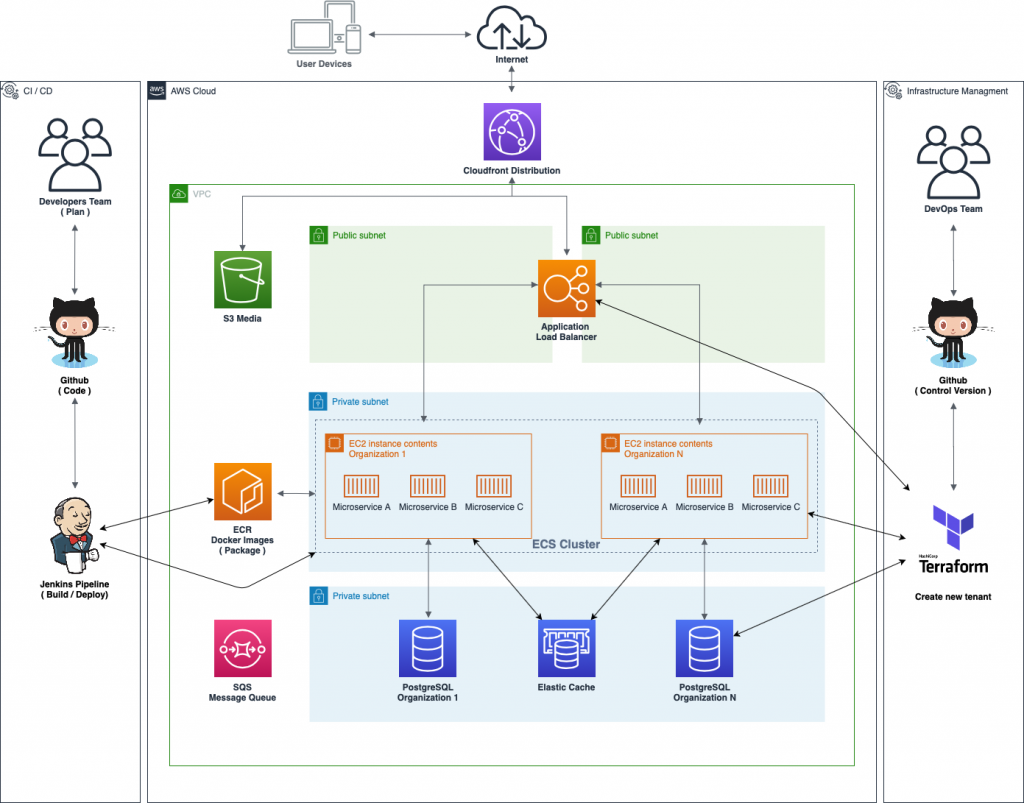

**Why it’s a top choice:**
* It is the largest cloud provider by market share. ([CloudZero][1])
* It offers a vast array of services (compute, storage, managed databases, analytics, ML, etc) which helps when your SaaS grows into more complexity. ([OpenMetal IaaS][2])
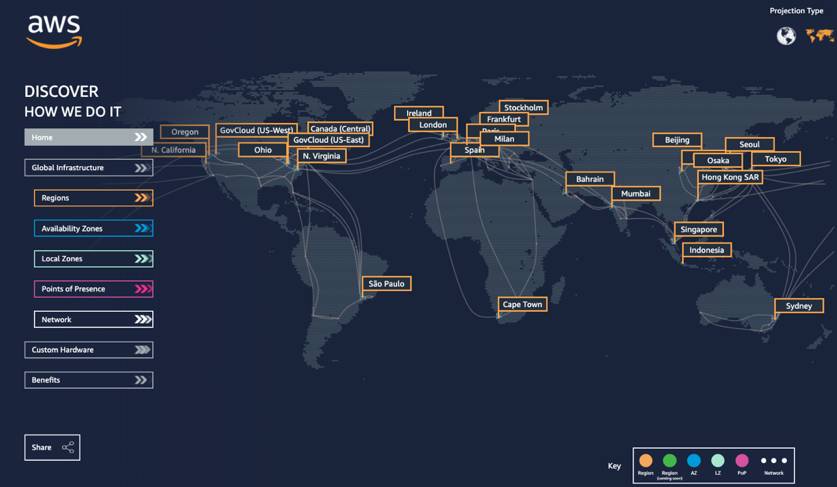
* Flexible pay-as-you-go pricing models, good global coverage and enterprise-grade reliability. ([OpenMetal IaaS][2])
* Plenty of startup programmes/credits (especially for early-stage SaaS) which helps reduce upfront cost. (e.g., AWS Activate, etc) ([DevCom][3])
**Trade-offs to watch:**
* Costs can escalate quickly if you’re not careful with resource management, data transfer fees, idle instances, etc. ([OpenMetal IaaS][2])
* The breadth of services means more complexity – you’ll need good DevOps/architecture discipline.
* Sometimes overkill for an MVP or very lean product where you just want to focus on rapid iteration.
**When you might pick AWS:**
* If you expect to scale globally, use advanced services (analytics, ML, IoT) or anticipate high growth.
* If you also foresee enterprise-grade requirements (security, compliance, multi-region failover).
* If you have or plan to build a capable DevOps/infra team.
---
## 2. Google Cloud Platform (GCP)

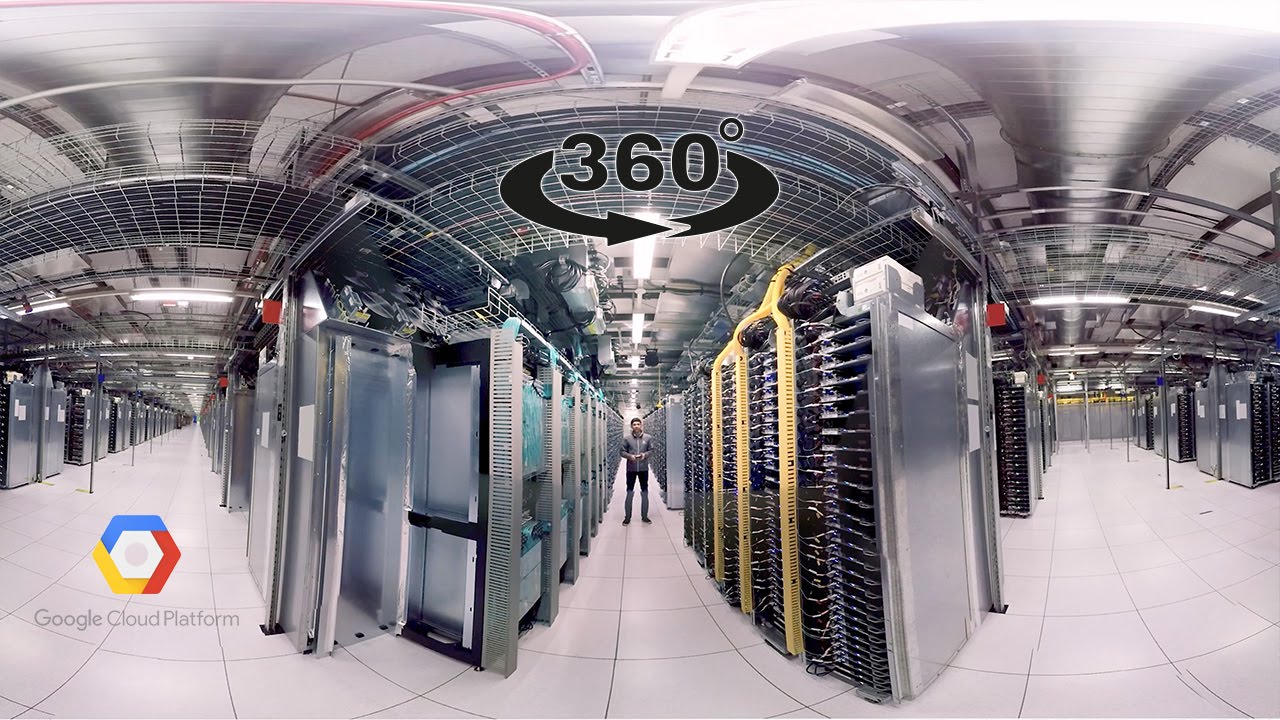
**Why it’s compelling for SaaS startups:**
* Google has strong offerings in data/analytics, AI/ML and open-source integration which can be a differentiator for SaaS companies that lean into data or AI. ([cloudvisor.co][4])
* They provide startup support: for example, via their “Google for Startups Cloud Program” with credits for early stage companies. ([Google Cloud][5])
* Good ecosystem if you already use Google services or want to leverage Google’s developer tooling.
**Trade-offs:**
* Slightly fewer global data-centre regions than AWS (depending on your growth geography) which may matter if you serve many geographies. ([cloudvisor.co][4])
* Pricing or service maturity may differ slightly compared to the absolute market leader (AWS) in some domains.
* If your team is very AWS-familiar, there may be a learning curve.
**When you might pick GCP:**
* If your SaaS is data-/AI-heavy, or you want tighter integration with Google’s ML tooling.
* If you’re building something in a market where Google has strong presence/regional data centres.
* If you are eligible for their startup credits and intend to leverage them.
---
## 3. Microsoft Azure




**Why Azure is often recommended:**
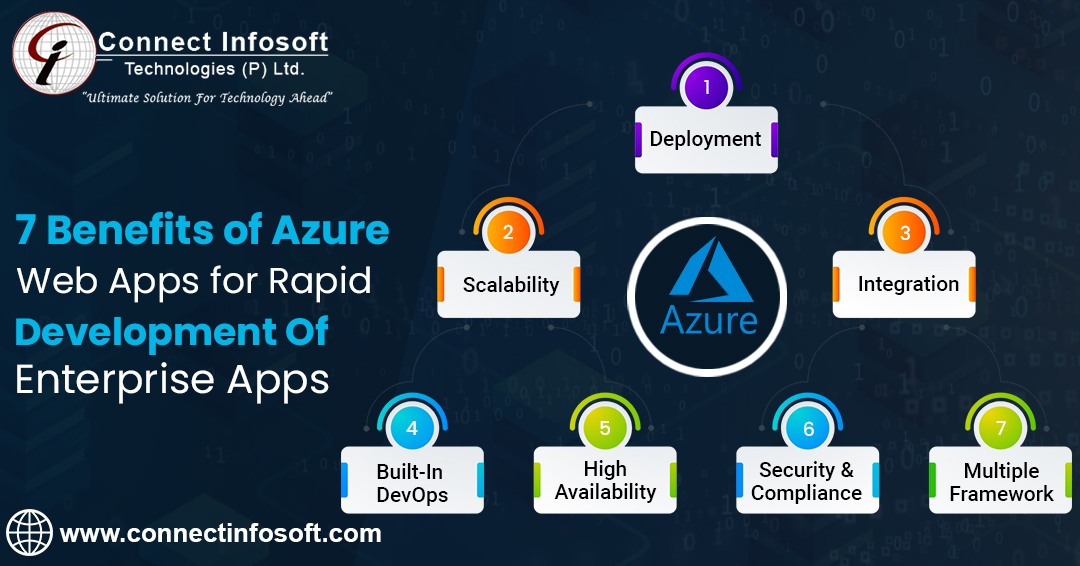
* It has very broad enterprise reach and deep integrations with Microsoft technologies (Windows, .NET, Microsoft 365, etc) which helps if your SaaS product or customers align with that ecosystem. ([cloudvisor.co][4])
* It offers startup programmes and credits similar to AWS and GCP. ([DevCom][3])
* Strong global footprint and enterprise-grade services.
**Trade-offs:**
* Some startups find Azure’s pricing and resource configuration a bit more complex compared to more “developer-friendly” clouds.
* If you're fully cloud-native and not aligned with Microsoft tech, you might not leverage their strongest differentiators.
**When you might pick Azure:**
* If you anticipate selling into enterprises that already use Microsoft stack (Office 365, Azure AD, etc).
* If your development team works heavily with Microsoft tools.
* If you want the familiarity/credibility of a major vendor when selling to large customers.
---
## 4. DigitalOcean


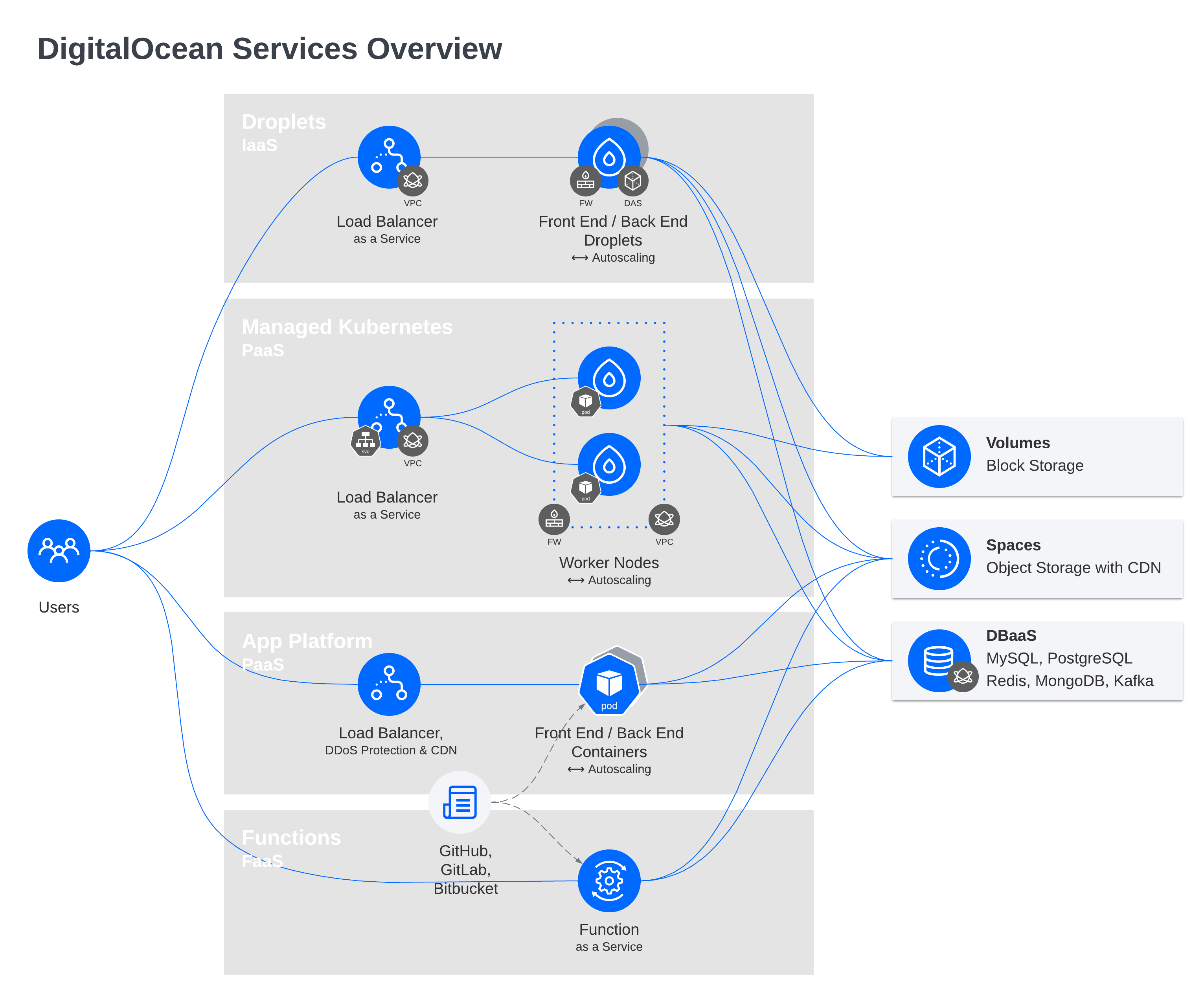
**Why this is interesting for early-stage SaaS startups:**
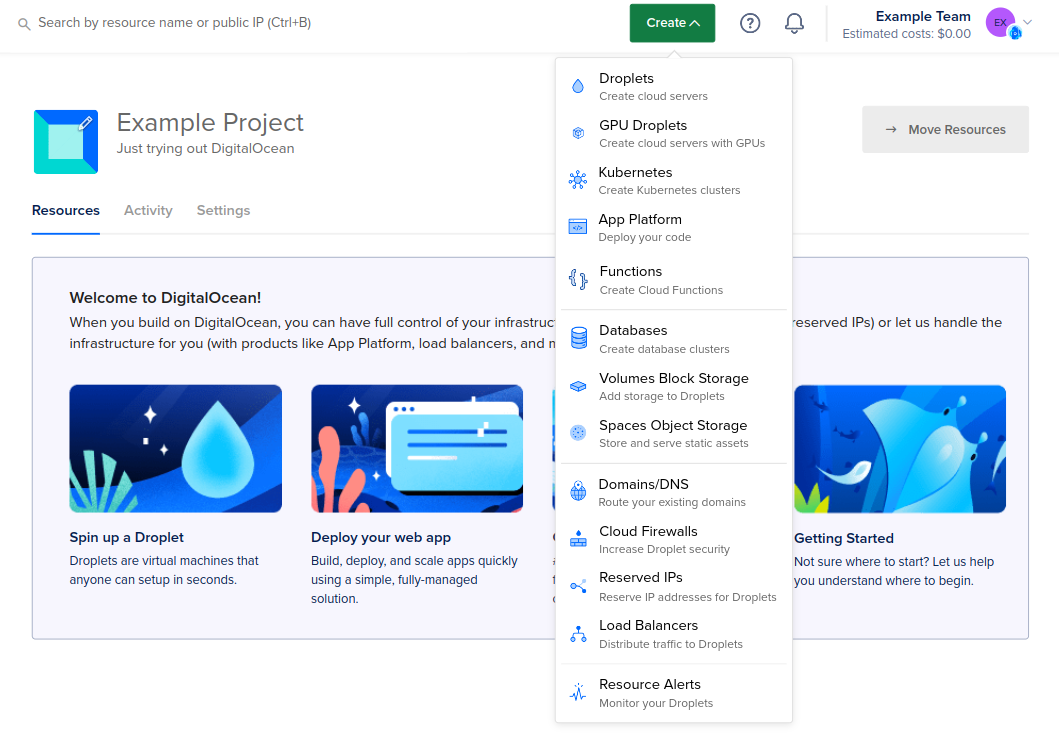
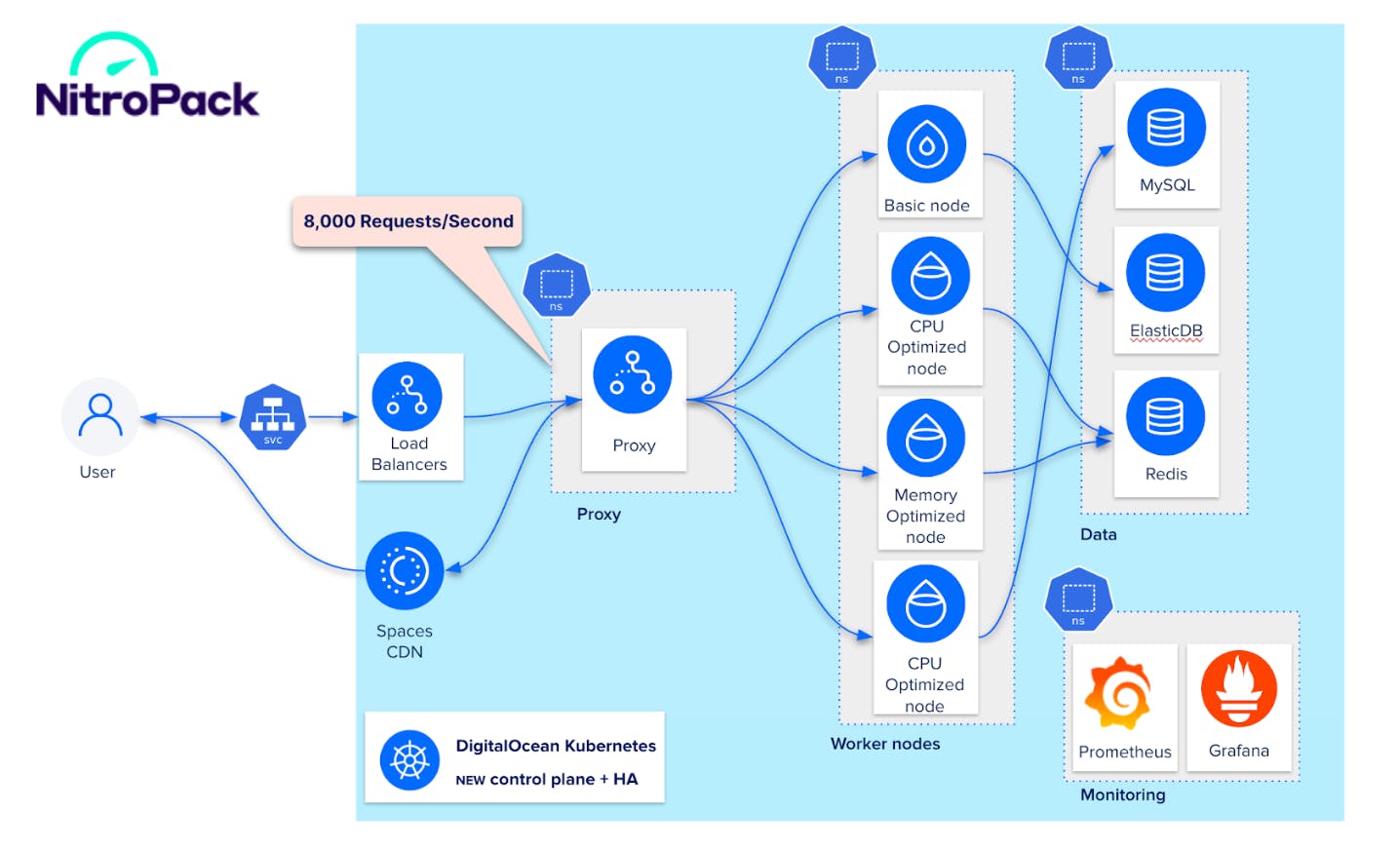
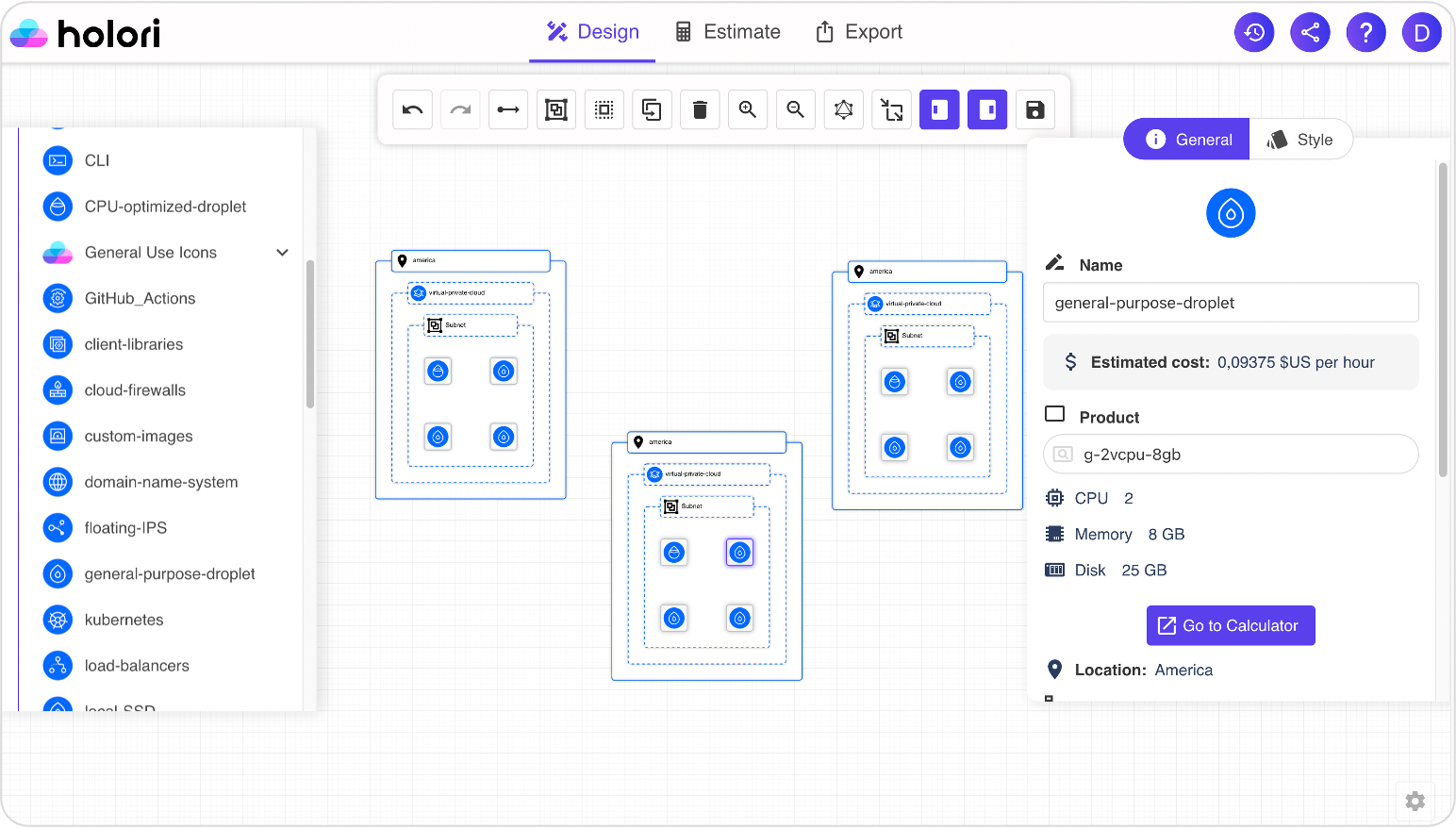
* It emphasises simplicity, transparent pricing and ease of use compared to the major "hyperscalers". ([DigitalOcean][6])
* It’s often cheaper and less complex when you’re building an MVP or early product and don’t yet need the full scale or complexity of AWS/GCP. ([Reddit][7])
* They have a “SaaS hosting” specific solution, which shows they’re positioning for exactly this use-case. ([DigitalOcean][8])
**Trade-offs:**
* When you hit very large scale, or need very advanced services (global multi-region, advanced ML/AI, huge data-lake services) you may outgrow it or need to migrate/augment with a bigger provider.
* Smaller ecosystem, fewer “bells and whistles” than AWS/GCP/Azure (though that may be fine for many SaaS startups).
* If you aim to sell into large global enterprise customers with heavy compliance/regulatory demands, you’ll want to ensure the provider supports those.
**When you might pick DigitalOcean:**
* If you’re in the early stage, want to build fast, keep infrastructure simple, control cost, and iterate quickly.
* If your SaaS product is relatively straightforward (web app, APIs, modest traffic) and you don’t yet need distributed backbone across many regions.
* If your team is small and you don’t want to manage complex cloud architecture overhead.
---
## Key Comparison & Decision Checklist
Here are some questions and criteria to help you decide which cloud provider fits your SaaS startup best:
| Criteria | Why it matters |
| -------------------------------------------- | ------------------------------------------------------------------------------------------------------------------------------------------------------------ |
| **Scalability & global reach** | If you expect many users across geographies, you’ll want global data centres, edge-services, multi-region failover. |
| **Cost predictability** | Startups need to watch burn-rate. Transparent pricing and predictable cost models help. e.g., DigitalOcean emphasises this. ([DigitalOcean][6]) |
| **Startup credits / accelerator programmes** | These help reduce early infrastructure cost and risk. AWS, GCP, Azure all have startup programmes. ([DevCom][3]) |
| **Service breadth & ecosystem** | If you’ll need advanced services (analytics, AI/ML, microservices, Kubernetes, serverless) picking a provider with richer ecosystem may save work long-term. |
| **Team competence / familiarity** | Choose a platform your team knows (AWS vs Azure vs GCP). Learning curve means time lost. |
| **Compliance / enterprise readiness** | If you target enterprise customers (or regulated industries) you’ll need strong security, certifications, availability zones etc. |
| **Ease for MVP vs scale stage** | Early stage may prefer simplicity & cost-efficiency (e.g., DigitalOcean) while later you may migrate to a hyperscaler for scale. |
| **Vendor lock-in / portability** | Consider how easy it will be to switch providers later, or use a multi-cloud strategy (though that brings complexity). |
---
## My recommendation for a SaaS startup in India (for your context)
Since you are based in Mumbai, India (Asia/Kolkata time zone) and building SaaS (presumably with growth ambitions), here’s what I’d suggest:
* Start with **DigitalOcean** or a lower-cost environment for your MVP or first version: Keeps costs down, lets you iterate quickly.
* At the same time, keep architecture modular so that if you pick, say, AWS or GCP later, the migration cost is manageable (use containers, microservices, avoid proprietary services you can’t decouple).
* As you look to scale (international customers, high traffic, advanced features), plan a move or hybrid use of AWS or GCP (they have data centres in India/subcontinent region, and startup programmes). For example, GCP tends to be good if you also lean heavily on AI/data features. AWS gives the broadest set of global services.
* Consider the startup credit programmes: e.g. GCP’s “Google for Startups Cloud Program” offers substantial credits for seed- to Series A-stage. ([Google Cloud][5])
* Pay close attention to cost-management from day one. Even big providers can surprise you with data transfer or mis-configured resources. (See AWS cost caution). ([OpenMetal IaaS][2])
---
If you like, I can **compile a longer list** of cloud providers (including more niche ones) specifically for SaaS startups in India (pricing in INR, regional data centres, startup-friendly programmes) and include pros/cons, startup credits, and recommended choice for each stage. Would that be useful?
[1]: https://www.cloudzero.com/blog/cloud-service-providers/?utm_source=chatgpt.com "21+ Top Cloud Service Providers Globally In 2025 - CloudZero"
[2]: https://openmetal.io/resources/blog/aws-pros-and-cons-for-saas-hosting/?utm_source=chatgpt.com "AWS Pros and Cons for SaaS Hosting - Open Metal"
[3]: https://devcom.com/tech-blog/top-3-cloud-hosting-solutions-for-startups/?utm_source=chatgpt.com "3 Best Free Cloud Hosting Services For Startups - DevCom"
[4]: https://cloudvisor.co/blog/what-cloud-solution-is-best-for-your-startup/?utm_source=chatgpt.com "What Cloud Solution Is Best for Your Startup? - Cloudvisor"
[5]: https://cloud.google.com/startup?utm_source=chatgpt.com "Startups | Google Cloud"
[6]: https://www.digitalocean.com/solutions/startups?utm_source=chatgpt.com "Hosting for Startups - Build & Scale in the Cloud - DigitalOcean"
[7]: https://www.reddit.com/r/startups/comments/1e68nk9/best_cloud_provider_for_hosting_my_first_saas/?utm_source=chatgpt.com "Best Cloud Provider for Hosting My First SaaS Website: AWS, Azure ..."
[8]: https://www.digitalocean.com/solutions/saas?utm_source=chatgpt.com "SaaS Hosting - DigitalOcean"
Brands Mentioned
1
Amazon Web Services
2
Google Cloud Platform
3
Azure
4
Digital Ocean